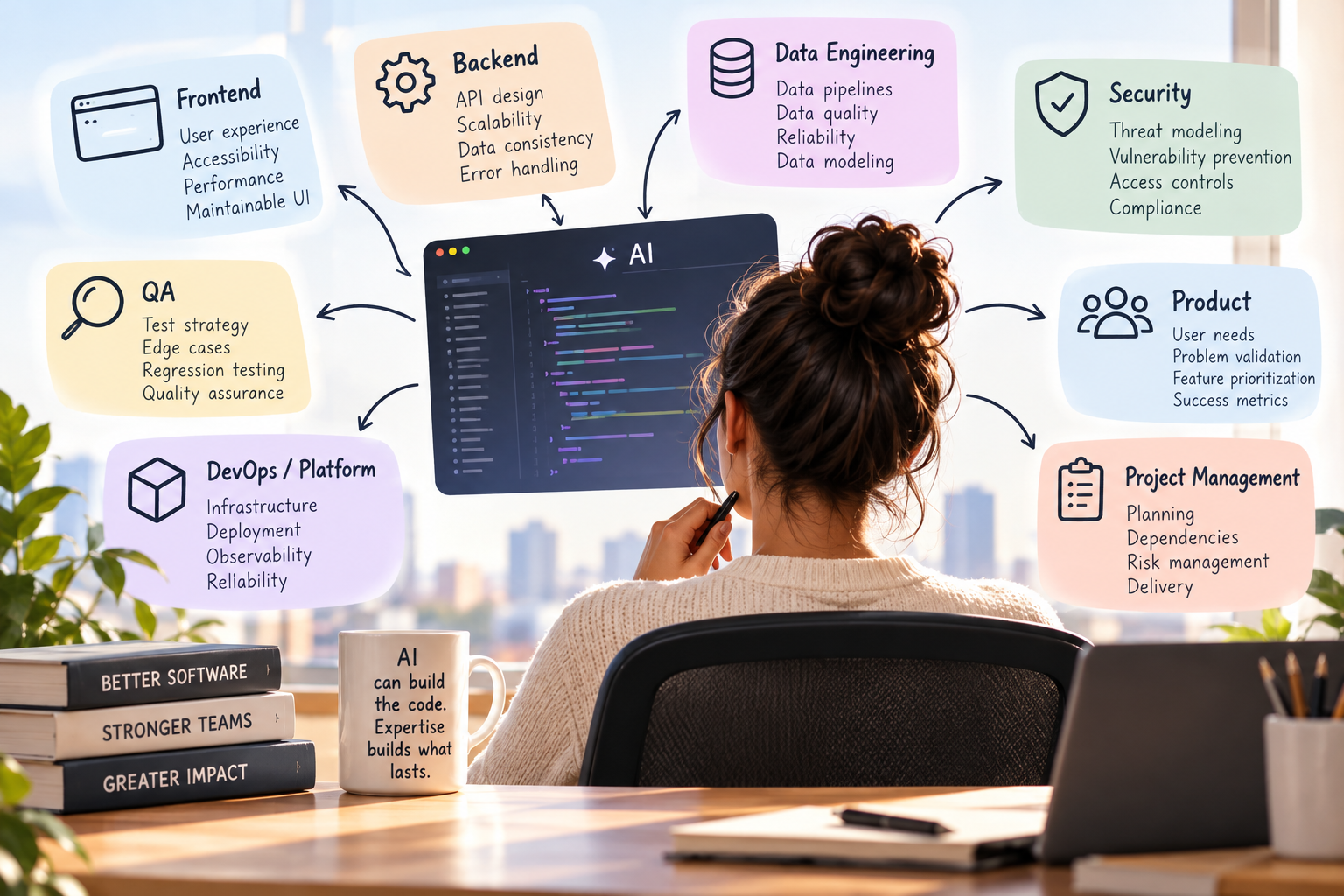
Parallelizing Work with AI Agents: Productivity, Context Switching, and Finding the Right Balance
As AI becomes more integrated into software development, we're not just changing how we write code. We're also changing how we organize our work.
Instead of approaching our backlog one ticket at a time, we can now leverage multiple AI agents to work on different tasks simultaneously.
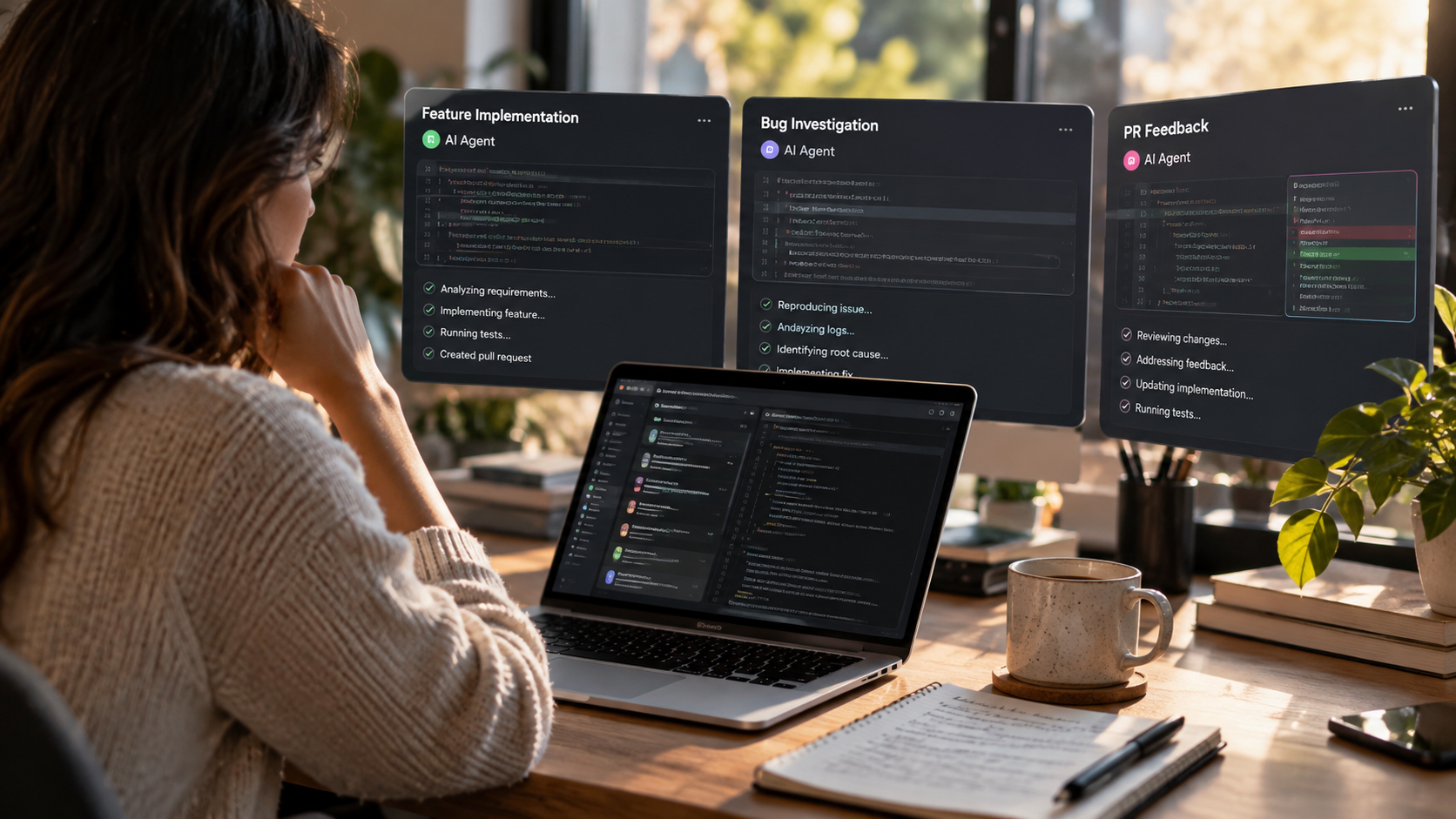
For example, one agent might be implementing a feature while another investigates a bug, and a third addresses feedback on an existing pull request. Meanwhile, we can continue reviewing code, validating changes, or handling other responsibilities.
This allows us to move several tasks forward simultaneously, make better use of the time we'd otherwise spend waiting for agents to finish, and ultimately get more work done.
But being able to run multiple agents introduces challenges around context switching, coordination, and keeping track of unfinished work.
Learning how to manage parallel work effectively is becoming another important skill for software engineers.
I've been experimenting with this approach and reflecting on both its benefits and challenges. Here is an interview-like format to share how I'm experiencing this.
How has working with multiple AI agents changed the way you approach your backlog?
I now actively look for opportunities to work on two or three tasks in parallel.
When reviewing my backlog, I consider which tasks can be worked on independently and which ones require my direct attention.
For example, I might have one agent working on a complex implementation while another investigates a bug or works on a separate ticket. In the meantime, I can review code, validate changes from a previous task, or handle an on-call investigation.
The idea is to keep multiple tasks moving without having to wait for each one to finish before starting another.
What are the biggest benefits you've noticed?
Two things: making better use of my time and getting more work done.
Some tasks take longer than others, and agents don't always need constant supervision.
While an agent works through a complex implementation, I can make progress on another ticket instead of waiting for it to finish.
The same applies when waiting for code reviews, testing results, or feedback.
Being able to move between independent tasks means less idle time and more opportunities to make progress throughout the day.
What challenges have you encountered?
One of the biggest challenges is context switching.
Agents can finish tasks quickly or frequently request input, especially when working on complex problems.
When several agents need attention around the same time, I can find myself jumping between completely different topics without much time to process each one.
Another challenge is keeping track of unfinished work.
Open pull requests, tickets, pending reviews, and unresolved issues can pile up quickly if you're not diligent about following through.
And sometimes, when you have multiple agent conversations open, you might even find yourself giving instructions to the wrong agent! 😅
These might seem like small inconveniences, but I think they're exactly the kinds of challenges we now need to get better at managing.
AI agents can move much faster than we do, but that doesn't mean we have to keep up with their pace at the expense of our focus or well-being.
Learning to manage that pace, stay organized, and protect our mental bandwidth is becoming part of working effectively with AI.
Does running more agents necessarily make you more productive?
Yes, most of the times. But there's a limit.
Ultimately, you want to finish things end to end, not just have a lot of work in progress. If you open ten AI sessions simultaneously, I imagine it becomes much harder to keep track of everything, review the results, and actually close things out. Not to mention the cognitive overload!
I'm still getting used to parallelizing my work. In the past, I've been very effective at working sequentially and delivering high-impact results. But with AI agents, working exclusively one task at a time means we're not taking full advantage of what these tools can do.
The challenge is finding a level of parallelization that leverages AI's capabilities without overwhelming ourselves.
For me, having around three tasks running in parallel, while leaving room for code reviews, on-call support, and team collaboration, feels like a good balance.
More recently, as I get better at managing multiple agents, I'm starting to experiment with four or five concurrent tasks but I always try to remember that The goal isn't to maximize the number of agents running. It's to maximize what we can meaningfully accomplish.
Final Thoughts
AI isn't just changing how we write code. It's also changing how we organize and manage our work.
Parallelization is becoming another skill worth developing, but it comes with its own learning curve.
Finding the right balance between parallel execution, focus, and follow-through is what makes the difference.
And I'm still learning what that balance looks like.
How are you balancing parallelization and focus when working with AI?
About the author
- I'm a software engineer with over 15 years of experience. While my background is primarily in backend engineering, my work today spans cloud infrastructure, AI integrations, and the systems that support modern software applications. I started this blog to share what I’ve learned in a simplified, approachable way — and to add value for fellow developers. Though I’m an introvert, I’ve chosen to put myself out there to encourage more women to explore and thrive in tech. I believe that by sharing what we know, we learn twice as much — that’s precisely why I’m here.
Comments
Join the discussionNo comments yet. Be the first to comment.